
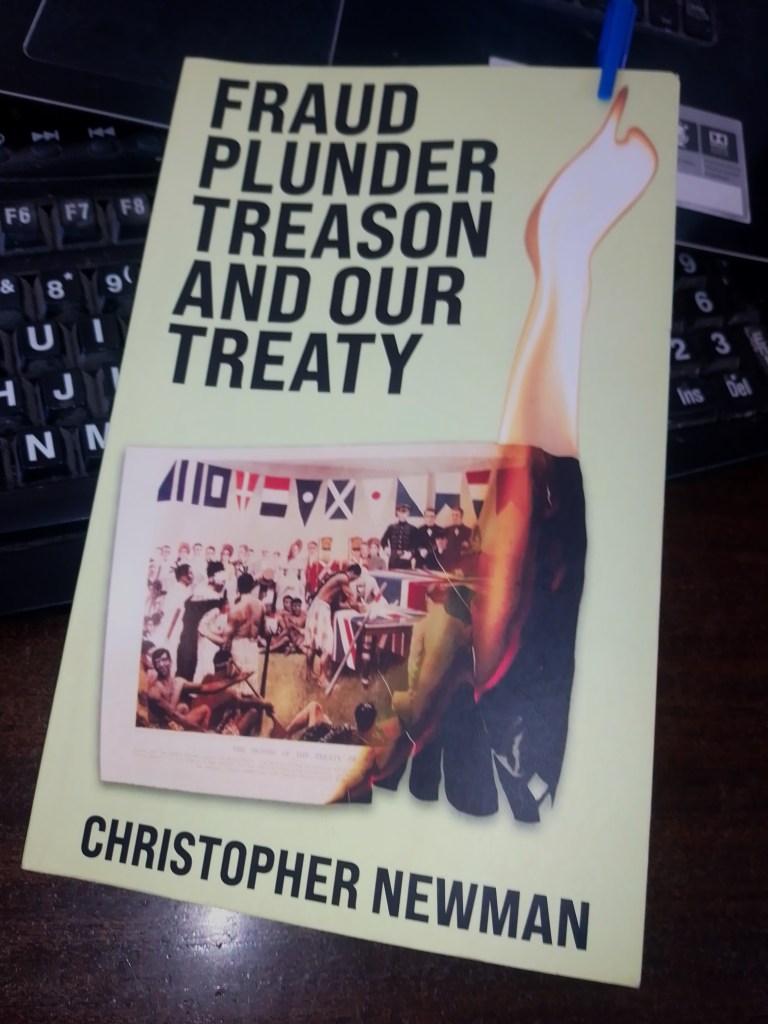
The following is an excerpt from author Chris Newman’s excellent new book “Fraud Plunder Treason and Our Treaty”. Chris has done a magnificent job of bringing together the many strands and influences that contribute to the whole picture of what has happened to New Zealand society, culture and democracy over the last 50 years.
From the beginnings of local agitation with Nga Tamatoa, and their openly Marxist influence. To the strange morphing of the government into a corporate entity that seems to want nothing more than to cede the assets of the people into the control of another corporate entity,- the corporate Iwi Elite.
This book is extremely broad in scope, covering the people and personalities involved, the philosophy that underpins the fraud and the psychology that enables its continuation. As New Zealanders, we need to know our history, for there are powerful forces intent on stealing our birthright and enslaving us in our homes. On the world stage they call it the ‘Great Reset’ or ‘Agenda 2030’, whatever the name the pernicious plans of the UN or Klaus Schwab to convince us that we’ll own nothing and be happy, continue apace! Here at home the same objectives are called He Puapua, Mātauranga Māori and the re emergence of Tikanga as a legal system of Laws to control the people.
Orwell said; ”The most effective way to destroy a people is to deny and obliterate their own understanding of their history.”
The book is 342 pages long, over the next few weeks we’ll publish a small section from each of the four chapters in the book. To find out more or to purchase the book visit NewmanPress.com
INTRODUCTION
You are about to discover evidence of a fraud imposed on the people of New Zealand to honour the “spirit” of the Treaty of Waitangi. Like most crimes of deception, this fraud begins with a seemingly innocent request.
When Matiu Rata was the Minister of Maori Affairs, in a speech on Friday, 8 November 1974, he asked fellow MPs to vote for a Bill that “would support the meaning and effect of the 1840 Treaty of Waitangi.” The MPs passed The Treaty of Waitangi Act 1975. Then, in 1985, Geoffrey Palmer, the Deputy Prime Minister and Attorney General in David Lange’s Labour Government, amended the Act to allow persons who claim descent from Maori persons to claim compensation going back to the signing of the Treaty in 1840.
Palmer’s action opened the gates to a flood of applications that were finally closed in 2008 with the aim of resolving them by 2020. The claimants believed that the Crown had breached the conditions of The Treaty of Waitangi of 1840 and harmed them. We shall discover that these people base their claims on the incorrect version of the Treaty. However, Palmer pushed forward with his misguided campaign because, as he claimed in a 2006 speech,
“I thought this would promote a sense of justice among Maori and give them an increased stake in society. Such an effort would act as an insurance against marginalisation and majority tyranny.”
Palmer’s socialist idealism brought damaging consequences not anticipated by the members of Parliament. Based on the Waitangi Act and its amendment, a small group of professionals, the “Treatyists”, took advantage of the statute. They operated under the cloak of the Maori “race” to enrich themselves at the expense of other Maori and the rest of us. Note that the term “Treatyists” includes radicals of the Maori sovereignty movement, yet their race-based agenda defiantly contradicts the terms and spirit of the Treaty of Waitangi.
Decades of Treatyist activity demonstrate how politicians and lawmakers have divided the nation. They opened the path to a new form of injustice: the tyranny of race-based co-governance. Palmer’s disastrous social engineering is a terrible example from someone who wants to design a Constitution for the nation.
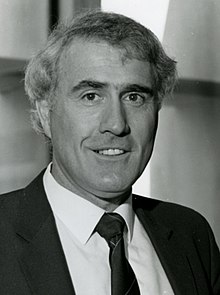
Suppose you study Palmer’s involvement with Government as a Treatyist. This lawyer has based much of his career on providing legal services through his business Chen, Palmer & Partners. Palmer is heavily involved with exchanging words on paper for large sums of money extracted from the taxpayer to finance his Treaty claims business. Follow the money trail, and you will find the conspirators running the schemes.
In this book we will use the word Maori in two distinct ways; first as an emotional (rhetorical) term and second as a logical (classification) term. The passionate speaker or writer who applies Maori in a rhetorical sense is attempting to persuade you, to cause you to absorb his emotions and agree with the argument. The logical speaker or writer defines what he means by Maori, backed with evidence, and invites you to develop fact-based assumptions and come to a thoughtful conclusion.
Most people of Maori descent are not involved in the fraud of Rata’s Act. However, the neo-tribal Iwi elites who exploit the system use the media to conceal their fraud behind a fake narrative about “Our People”, meaning members of their local Maori tribe. Their pro-Treatyist propaganda keeps the public deceived and confused about the real meaning of historical events and who or what is a maori or Maori. Very few New Zealanders have discovered the enormity of this fraud.
Elites use propaganda to control the mass population. Their ideology is exposed and analysed in our discussion. The emotions and motives of the ruling group find their shape and form in the dominant ideology. Party policy expresses the politicians’ideology. Finally, politicians embed their ideology into Parliamentary statutes, and the population mostly conforms to the rules from above.
Propagandists massage and spread the political message through the media. The TV show “Yes Minister” shows amusingly how politicians and bureaucrats manipulate the facts for public consumption. New Zealanders have endured decades of this type of abuse, especially around issues involving Maoridom and the Treaty.
Years of propaganda have brought our vulnerable population to a condition resembling mass hypnosis. Most people no longer see the contradictions in the politicians’ Treatyist narrative. The elites continue to use the authority of a Parliamentary statute and the aura of legality to control and plunder the rest of us. Meanwhile, the House of Representatives keeps passing even more legislation supplementing The Treaty of Waitangi Act 1975. So most New Zealanders, who are law abiding, assume that the statutes are correct and without deceit.
What exactly is deceit? Black’s Law, the 4th edition, has the following definition.
DECEIT;
A fraudulent and cheating misrepresentation, artifice or device used by one or more persons to deceive and trick another, who is ignorant of the true facts, to the prejudice and damage of the party imposed upon.
Most people would not knowingly submit to another’s trickery, fraud and plunder. The fraudster manipulates the victim’s perception, but whenever there is fraud, the remedy arrives when someone explains the facts that expose the deceiver. “Sunlight is the best disinfectant” because people can recognise the verifiable truth when someone brings it into the open. A healthy society practises and encourages uncensored debate and free speech.
This book exposes New Zealand’s recent history. It is an investigation into massive fraud, bloating of the bureaucracy, and plundering of the nation’s wealth. The following chapters will present events, personalities, motives and outcomes that may shock you. The author urges you to consider a course of action proven to bring our nation back from the brink of instability to a system grounded on solid lawful principles.
What motives drive people to abuse the political system and adopt policies that exploit others? One critical driver is ideology; another is emotion. Sometimes mistakes are made from ignorance or carelessness. A manipulative person will select an ideology that justifies their desire to gain power over others and access money and resources.
Marxism is the ideology favoured by revolutionaries and activists who seek power and political control. The most sophisticated version of Marxism, the scheme that cunningly divides society into identity groups while allowing the revolutionaries to take control, is called Cultural Marxism. The Cultural Marxist program has made a “long march through the institutions,” of New Zealand as the Italian Marxist theorist Antonio Gramsci (1891 – 1937) advocated.
CHAPTER 1: THE FRAUD
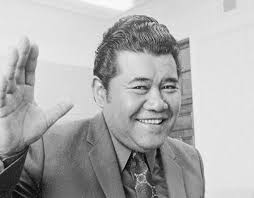
In 1975, one man, Matiu Rata the Minister of Maori Affairs, inserted a fraud into Parliament. Possibly he was guided by individuals skilled in the arts of deceit. The lawyers who designed and drafted his Treaty of Waitangi Act 1975 plus its Amendment of 1985 operated behind the scenes. The ordinary people remain unaware of the fraud because it is cloaked in legal language.
Rata’s words about the Treaty misled his fellow Parliamentarians. He hid from them the actual identity of the document that he so wrongfully declared was the English text of The Treaty of Waitangi. He avoided using the correct 1869 government-approved English translation of the original maori text. Then he misled the Parliament about the purpose of his law. Unaware of the hidden plot, the MPs believed Rata’s presentation and voted for his Bill.
Ten years later, in 1985, the Parliament amended Rata’s The Treaty of Waitangi Act 1975. This change made it legally permissible for the Crown to convey money, land, resources and political power from the ownership of the people of New Zealand to private Iwi interests, which are the legal corporate arms of tribal organisations. These tribal groups have never unified; they maintain competing, even antagonistic attitudes to each other based on their pre-European histories. But they pretend to represent the best interests of Maoridom.
The final step required for this political and social transformation was the State-Owned Enterprises Act of 1986. Together these three Acts of Parliament provide the legislation for Crown corporations to operate as businesses and to negotiate settlements with “Maori persons”, i.e. Iwi corporations. The business relationships between the Crown and Iwi corporations began to run through a new, Politically Correct interpretation of the Treaty of Waitangi. And the politicians, in their activities of nation-changing significance, wrongfully omitted the people of New Zealand from their equation.
In summary, politicians set up the Treaty Act, the Waitangi Tribunal and the Act’s Amendment to assist the prospects of corporate persons who claim to be descendants of persons of the Maori race. The result transfers the New Zealand people’s wealth to enrich a greedy few. This process may appear legal, but as we shall discover, it is inequitable, thieving and dishonest.
The solution to statutory fraud rests with the will of the New Zealand people. The people of today are learning how our Common Law legacy, introduced with the Treaty provides us with potent methods to remedy injustice. To solve our problems we must apply the traditions of English Common Law and bind the Parliament with its statutes. Then, the politicians will have to respect the people’s will and correct their fraud
Why did Rata produce The Treaty of Waitangi Act 1975?
From the early 1970s, a small group of activists manipulated public opinion to amplify division in our society. They agitated for race identity and, through petitions, demonstrations, lobbying and tribal social pressure, directed Rata, the Minister of Maori Affairs, to promote racebased legislation.
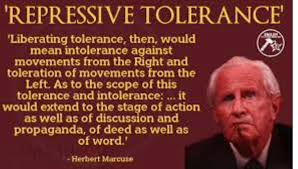
Activists push the accusation of “racism” to force conservatives and others to submit to their arguments. The liberal “inclusive” tendencies of the New Zealand European politicians made them reluctant to challenge Rata, who was Maori. The MPs did not cross-examine his proposals. Any contrary views or doubts were shut down by the “Repressive Tolerance” tactics, as taught by the Cultural Marxist guru Herbert Marcuse.
Maori activists used the media to weaken public opposition to Rata’s plans. The political naiveté of the conservative politicians allowed activists and opportunists to drive a wedge into New Zealand’s unsuspecting society. The political class retreated before the demands of greedy partMaori radicals and their allies. Some politicians even welcomed policies and programmes previously judged unacceptable and racially divisive.
Rata used “the spirit of the Treaty” as the spear’s tip to advance his agenda. He redefined the English meaning of the Treaty of Waitangi and eventually moved the government and Courts to accept his narrative. The government abandoned 135 years of the established order, people’s agreement on the nation’s historical facts, and long-accepted understanding of the Maori and English words in the Treaty.
The original spirit of the Treaty is one of friendship and unity. When Captain Hobson extended his handshake to greet each chief and declare, “We are now one people”, he embraced them. The new Critical Theory spirit is a divisive ideology that engineers conflict between Maori and Pakeha.
 The European New Zealander