
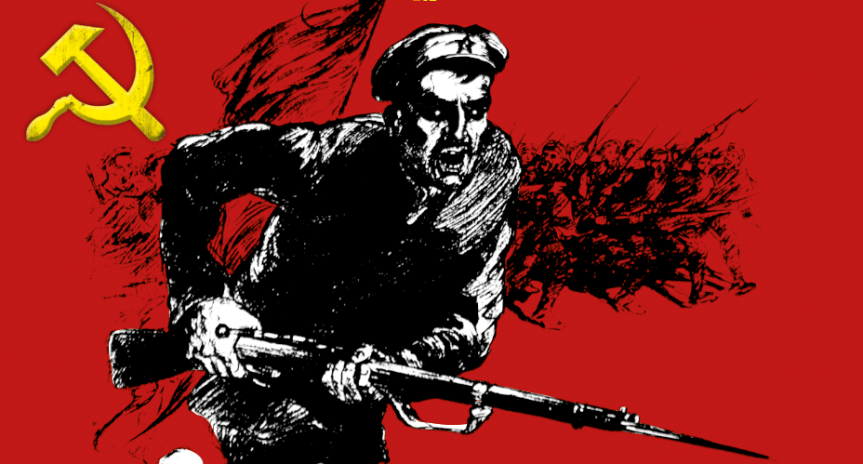
Review Essay by Kerry Bolton.
Ron Asher, Who was Behind the Bolshevik Revolution?
Tross Publishing, P O Box 22-143, Khandallah, Wellington 6441, New Zealand. $30 pp within NZ.
Prices for Foreign Buyers: Aust $30, UK £15, USA $20, Can. $25, Euros €15. https://trosspublishing.com/contact/
Tross Publishing has been around for several years, during which time it has attracted numerous smears and complaints from mediocre and agenda-driven academics, resulting in its books being removed and banned from some bookshops and libraries. Tross, owned by John McLean, focuses on New Zealand, challenging the anti-Settler narratives, although there have been several books about COVID and about China by Ron Asher.
The publication of Asher’s Who was Behind the Bolshevik Revolution? marks a new turn, dealing with issues that have not been widely discussed in New Zealand since the 1930s. The subject is the involvement of Jews in the 1917 Russian Bolshevik revolution and Soviet government. In publishing this book, one might wonder whether McLean has signed a (figurative) death warrant for Tross? While the repudiation of implicitly anti-White pseudohistory in most of Tross’s inventory has caused Tross various problems the publicity has helped book sales.1 However, the subject of Jews is so beyond the ken of New Zealanders that McLean is likely to undergo not only pressure and smears that are far more intense than anything hitherto experienced but also a lack of comprehension from the public.
Cresswell Review
The first review of the book comes from Peter Cresswell, apparently a libertarian blogger, claiming to be “politically incorrect”.2 Cresswell’s vitriol is such that one might conclude that, to paraphrase the great bard, he “protests too much.” Is this because Cresswell has been a contributor to three Tross books, ”3 and fears getting tarred with the “anti-Semitism” brush?
So eager is Cresswell to be seen on the side of the pure and the righteous that he includes two paragraphs on this reviewer, with the claim that I am the primary current source for the long-held allegation that Jacob Schiff of the Wall Street bank Kuhn, Loeb & Co., was the main bankroller of the Bolshevik revolution. Cresswell is presumably referring to a peer-reviewed paper in The International Journal of Russian Studies, entitled “Responses of International Capital to the Russian Revolutions”.4 However, the focus of this is not on Jews, Schiff, nor solely on Bolshevism.
Yet, as pointed out by McLean, I am not mentioned, cited or in any way connected with the Asher book, which makes Cresswell’s two paragraph diatribe against me rather odd. Of this McLean replies:
Unable to help himself in his rage, the reviewer wrote of the “Recrudescence of Anti-Semitic feeling of which Mr. Asher’s book is an ongoing part” the usual standard smear of “anti-Semitism” and further misinformation. His barely concealed anger even resulted in him devoting two paragraphs in lashing out at Kerry Bolton, a writer who was neither mentioned nor cited in the book. Why this irrelevance?
However, Mr. Bolton was not alone in being the victim of the smear. In fact, virtually every person and authority quoted in the book has suffered the same fate. Some examples. Belloc – “the noted anti-Semite” (again, the standard smear), Denis Fahey – “a fascist, would-be theocrat”…5
Fruitless debate on statistics
The crux of Cresswell’s critique is to contest the percentages of Jews in the Soviet Government. Cresswell cites statistics on the percentage of Jews that conflict with those cited by Asher. Of more significance is that the chief luminaries of Bolshevism were at the time considered overwhelmingly Jewish. For example, the postcard by Moisei Nappelbaum issued in 1918 to depict the “leaders of the proletarian revolution” shows Lenin, Zinoviev, Lunacharsky, Trotsky, Kamenev and Sverdlov. Lenin was of mixed parentage, with a Jewish component, Lunacharsky a Russia. The rest…?
As McLean states, the other premise of Cresswell’s review is to offhandedly dismiss all of Asher’s sources. Father Denis Fahey, a notable Catholic scholar, from whose book The Rulers of Russia (1938), is reduced by Cresswell to being no more than a “a fascist, would-be theocrat.” Others include Robert Wilton, Petrograd correspondent for The London Times, a careful observer who does not thoughtlessly throw about the word “Jew”;6 and Winston Churchill, who wrote in 1920 of Bolshevism being a “worldwide conspiracy for the overthrow of civilisation” among Jews.7
One gets the impression that Cresswell has done nothing more than run the names through Wikipedia.
Communists and Bankers
At the time of the 1917 revolution Jewish involvement was widely discussed in diplomatic, military and intelligence circles. M. Oudendyke, representative of The Netherlands in Petrograd, also representing British interests, wrote a report, cited by Asher (p. 45), in which he states that Bolshevism, “is organised and worked by Jews”.8 It is notable that the original British White Paper on Bolshevism was withdrawn and Oudendyke’s report in the subsequent edition had been removed. This gave rise to a myth that “anti-Semites” had falsified the Oydendyke comments. If the British Government succumbed to pressure to censor the Oudendyke comments, then maybe McLean is correct in his retort to Cresswell that the Soviet government was also eager to obscure the disproportionate involvement of Jews when releasing its statistics?
Similarly, with a U.S. Secret Service report at times claimed to be false, which specifically identifies Bolshevism with Jews and Jewish bankers, and is cited by Asher (p. 42). Asher identifies the report as U.S. State Dept. Decimal File (861-00/5339), as does research specialist Professor Antony Sutton, in Wall Street and the Bolshevik Revolution.9 Sutton sought to repudiate the allegations of the Jewishness of Bolshevism, while documenting the myriad links between international banking, industrial corporations and Bolshevik Russia. The document includes some accurate information such as the role of Max Warburg, chief financial adviser to the German Government and of Olof Aschberg of the Nye Banken in transferring funds to the Bolsheviks. The document also alludes to Jivotovsky (Abram Zhivotovsky), a banker, as Trotsky’s “father -in-law”. This mysterious banker was identified by Dr Richard B Spence, whose book Wall Street and the Russian Revolution 1905-1928 supersedes Sutton’s research,10 as Trotsky’s uncle, who was involved with funding the Bolsheviks.
German High Command and Parvus
Cresswell attempts to repudiate the role of Jewish bankers by citing the German High Command having funded and facilitated Lenin’s return to Russia. While reproducing a page from The Life of Lenin by Louis Fischer (1964) on this German involvement, no mention is made of the central role of Parvus (Alexander Israel Helphand),11 an influential Marxist theorist whom Pearson calls “a millionaire Marxist,” who “had become a caricature tycoon with an enormous car, a string of blondes, thick cigars, and a passion for champagne…”12
While the German High Command was attempting to manipulate Lenin, the British War Cabinet sought out Trotsky, and with assistance from the USA facilitated Trotsky’s return to Russia from New York, securing his release from detention in Nova Scotia, where he had been waylaid en route by British Naval Intelligence, who incorrectly suspected he was a German agent. British intelligence officer Sir William Wiseman, a banker by profession, was the principal character in this, liaising between the British and U.S. governments. After the war he entered partnership with Kuhn, Loeb & Co. 13
Why no accountability?
Asher’s purpose is limited: asking why Jews are exempt from being called to account for the crimes of the Bolsheviks when, he contends, so many participated in those crimes? There has been a collective, hereditary guilt complex imposed on others, particularly generations of Germans,14 extended to the Vatican,15 Christendom16 and the entirety of Western civilisation.
If Christianity was responsible for the Holocaust, for example, then might it not also be alleged that the paranoia against Christians imbued by Orthodox Judaism has contributed to the character of Bolshevist atrocities against Christians? Might not the messianic element in Judaism also have been transferred to Bolshevism?
Messianic Bolshevism
In this respect, regarding the bolshevization of the messianic complex, although not mentioned by Asher, a chapter might have well been included on its expression in the Bolshevik state’s League of the Godless, responsible for the anti-Christian measures under the leadership of Yemelyan Yaroslavsky (born Minei Izrailevich Gubelman). In an interesting paper on Soviet Jewry, Robert Weinberg writes on this:
Many radical Jews embraced the Bolshevik cause and spearheaded efforts to spread revolution within the Jewish community. Iaroslavskii, for example, the head of the League of the Godless, was a Jew born Minei Israilovich Gubel’man. Many of these activists came from religiously observant families, and notwithstanding their break from the world of their parents and grandparents, these Jewish Bolsheviks undoubtedly possessed first-hand experience with Jewish religious life that they could pass on to gentile colleagues.17
For every rabbi such as my grandfather who sought refuge in the United States in 1923, there was another Soviet Jew, such as my grandfather’s brother-in-law, who stayed behind and took advantage of the opportunities the Soviet regime offered to nonreligious Jews.18
While Cresswell points out that the first head of the Cheka was a Pole, Felix Dzerzhinsky, which is supposed to repudiate Asher’s comments about the disproportionate presence of Jews in the Soviet secret police, Jewish scholars have no qualms about commenting on such involvement, and seek to understand it, rather than deny it. For example, Prof. Leonard Schapiro in his introduction to The Jews in Soviet Russia since 1917, writes:
After the Revolution, the prevalence up to the mid-thirties of Jews at all levels of the dominant, often unpopular, communist machine, and particularly in the police – the Cheka, the GPU, and the NKVD – often led to the identification of anticommunism with antisemitism.19
Note that Schapiro alludes to “the prevalence … of Jews at all levels …” He states that until the 1930s the Soviet regime was rigorous in suppressing antisemitism; so sensitive were the Bolsheviks to the widespread perception of the character of the state. McLean’s retort to Cresswell that the Soviets skewered the numbers therefore seems credible.
The eminent Jewish Muscovite writer Arkady Vaksberg wrote of the Jews in the Red Terror, beginning with the murder of the Czar and his family, “But there is no getting around the fact that the first violins in the orchestra of death of the tsar and his family were four Jews – Yanker Yurovsky, Shaia Goloshchekin, Lev Sosnovsky, and Pinkus Vainer. The concert master was Yakov Sverdlov.”20 Vaksberg states that while Dzerzhinsky focused his attention on being head of the Higher Council on Agriculture, “Yagoda was the real chief.”21 Yagoda assumed leadership of the OGPU during 1934-36.
Israel Protected Wanted Murderers
Although not mentioned by Asher, what could have bolstered his argument about lack of accountability is the role of Israel in providing asylum for former Soviet secret police officers wanted for atrocities after World War II, including Solomon Morel from Poland; and Nachman Dushansky and Semion Berkis-Burkov, whose extraditions from Israel were sought by the Lithuanian Prosecutor-General’s Office.
In Latvia when the Soviets invaded in 1940, Jewish secret police officers were notable in the Red Terror, including Semion Shustin as State Security commissar; Alfons Noviks, Interior Commissar NKVD; Berei Shivoshinsky, head of the concentration camps; Izak Bucinskis; organizer of the People’s Militia (Communist police), and Moses Citrons, director of the NKVD at Daugavopils. When some of these, such as Noviks, were tried, the reaction of Jewish organizations was that of outrage.22 This apparent disregard by certain Jewish organizations for the victims of Bolshevism when Jews were the perpetrators, suggests that Asher has a valid point in questioning the lack of accountability.
- “Company accused of anti-Maori publishing promoting books at schools”. TV1 News, December 12, 2021, https://www.1news.co.nz/2021/12/12/company-accused-of-anti-maori-publishing-promoting-books-at-schools/
“Racist propaganda: the undercover campaign to infiltrate school libraries,” Stuff, July 2, 2023, https://www.stuff.co.nz/national/education/300899633/racist-propaganda-the-undercover-campaign-to-infiltrate-school-libraries - P Cresswell, Book review, Not PC, https://pc.blogspot.com/2026/03/book-review-who-was-behind-bolshevik.html
- J McLesan, Tross Publishing, https://trosspublishing.com/?s=Cresswell
- K R Bolton, “Responses of International Capital to the Russian Revolutions”, The International Journal of Russian Studies, Issue 1, 2012, https://www.ijors.net/issue1_1_2012/articles/bolton.html
- McLean, op. cit.
- Robert Wilton, Russia’s Agony (New York: Dutton & Co., 1919); online: https://archive.org/details/russiasagony02wilt/page/n9/mode/2up
R Wilton and G Telberg, The Last Days of the Romanovs (New York: Doran Co., 1920);
online: https://archive.org/details/lastdaysromanov00sokogoog/page/n9/mode/2up - W Churchill, “Zionism versus Bolshevism: a Struggle for the Soul of the Jewish People”, Illustrated Sunday Herald, February 8, 1920, p. 5.
- A Collection of Reports on Bolshevism in Russia, Presented to Parliament by Command of His Majesty, April 1919 No. 1 (1919), [with] A Collection of Reports on Bolshevism in Russia.
- A Sutton, Wall Street and the Bolshevik Revolution (New Rochelle: Arlington House Publishers, 1974), “The Jewish Conspiracy Theory of the Bolshevik Revolution”, pp. 186-187.
- Richard B Spence, Wall Street and the Russian Revolution 1905-1928 (Or.: Trine Day, 2017).
- Sutton, p. 41.
- Michael Pearson, The Sealed Train (London: Macmillan, 1975), p. 58.
- Spence, pp. 161, 178.
- Daniel Goldhagen, Hitler’s Willing Executioners: Ordinary Germans and the Holocaust (Alfred A Knopf, 1996).
- John Cornwall, Hitler’s Pope (Viking, 1999).
Susan Zuccotti, Under His Very Windows: the Vatican and the Holocaust in Italy (Yale University Press, 2000). - Simon Ponsonby, “The Shocking Truth About Christianity and the Holocaust,” Premier Christianity, https://www.premierchristianity.com/features/the-shocking-truth-about-christianity-and-the-holocaust/3934.article
- Robert Weinberg, “Demonizing Judaism in the Soviet Union During The 1920s”, Slavic Review. Volume 67, Issue 1, 2008, p. 146; https://works.swarthmore.edu/fac-history/88
- Robert Weinberg, p. 121.
- Schapiro in L Kochan (ed.) The Jews in Soviet Russia since 1917 (London: Inst. of Jewish Affairs, Oxford University Press, 19070), p. 9.
- A Vaksberg, Stalin Against the Jews (New York: Knopf, 1994), p. 37.
- Vaksberg, p. 35.
- “Around the Jewish World: Latvian Jews Troubled by ‘Genocide’ Conviction of a Former Soviet Official”, JTA, 11 October 1999, https://www.jta.org/archive/around-the-jewish-world-latvian-jews-troubled-by-genocide-conviction-of-a-former-soviet-official-2
 The European New Zealander